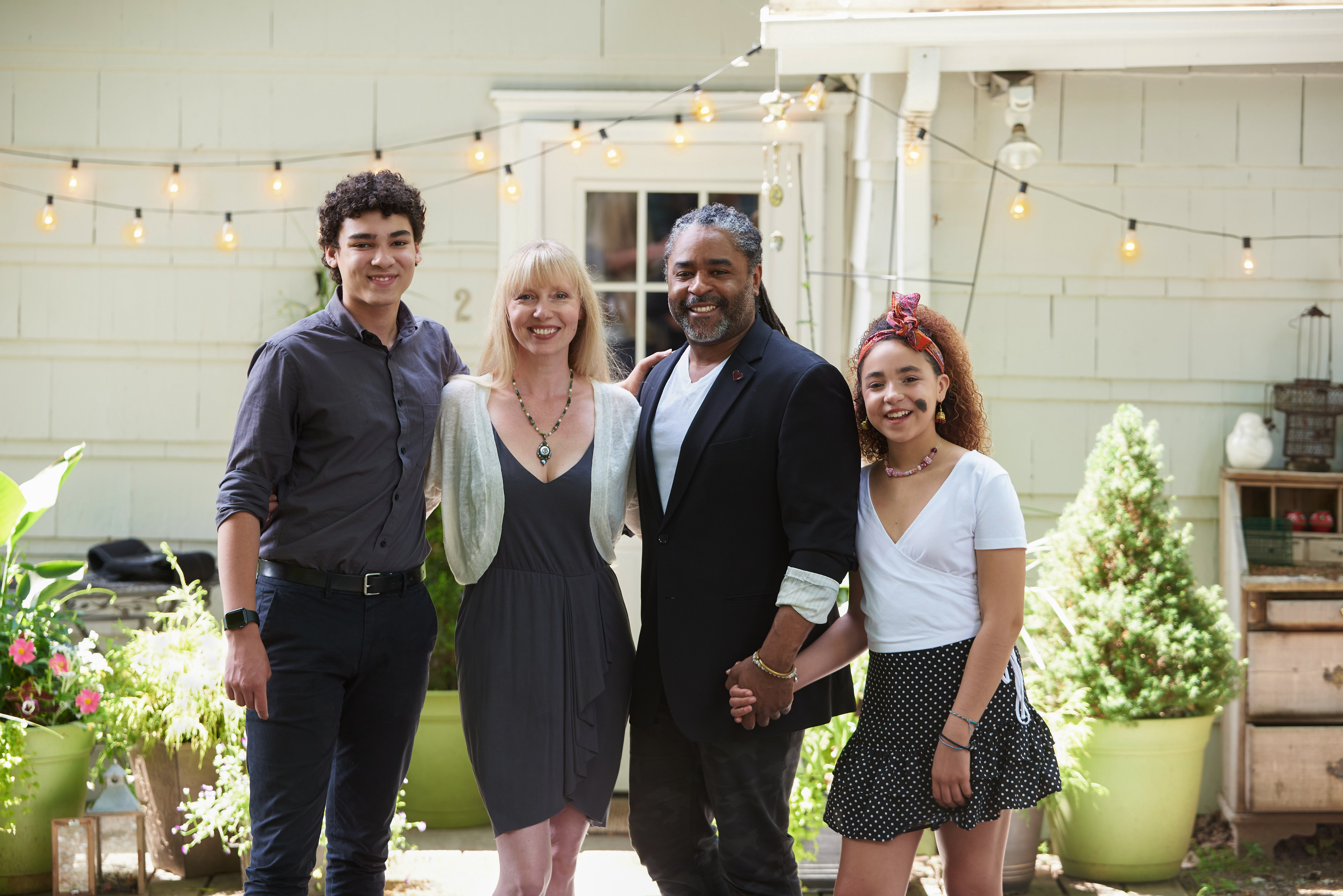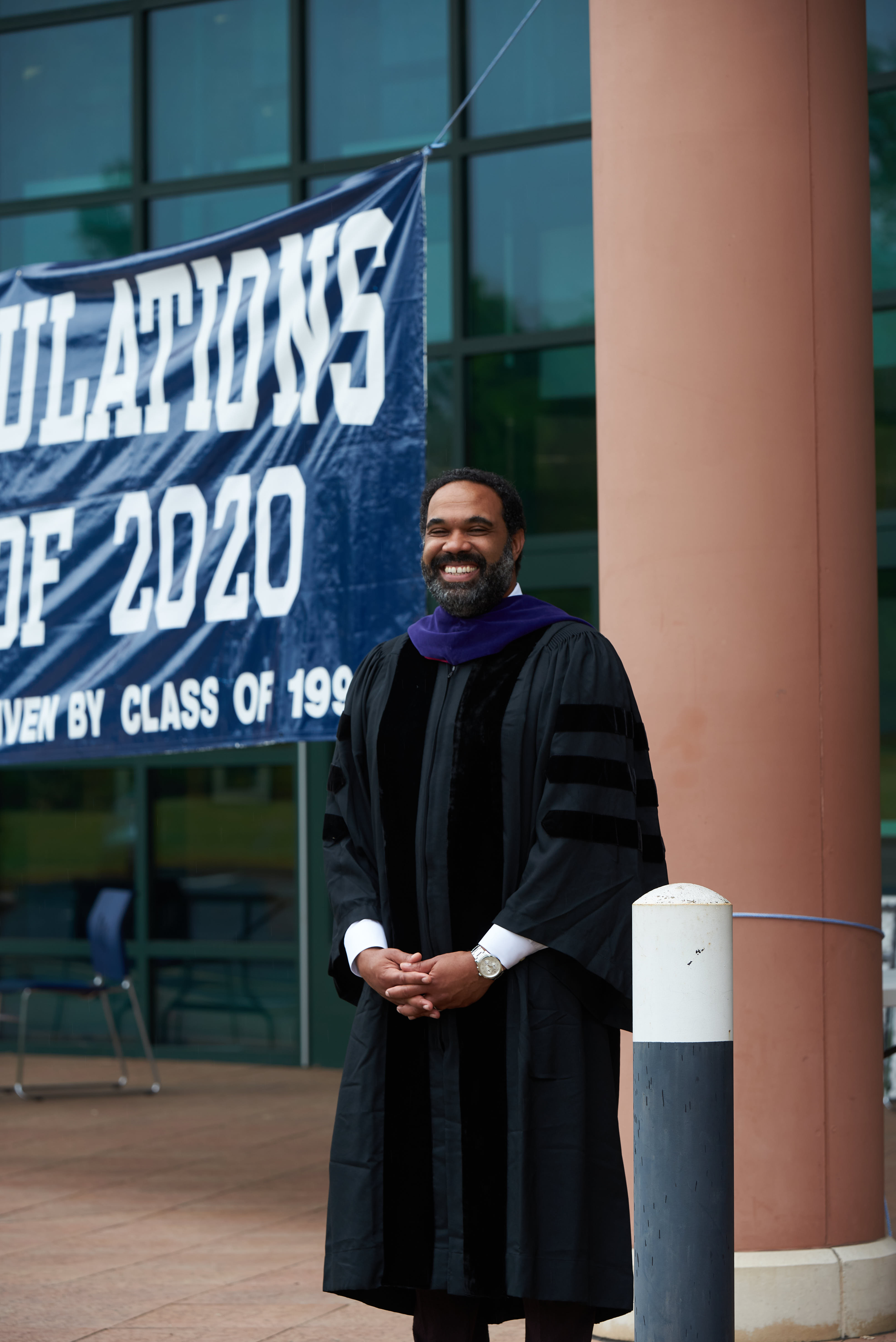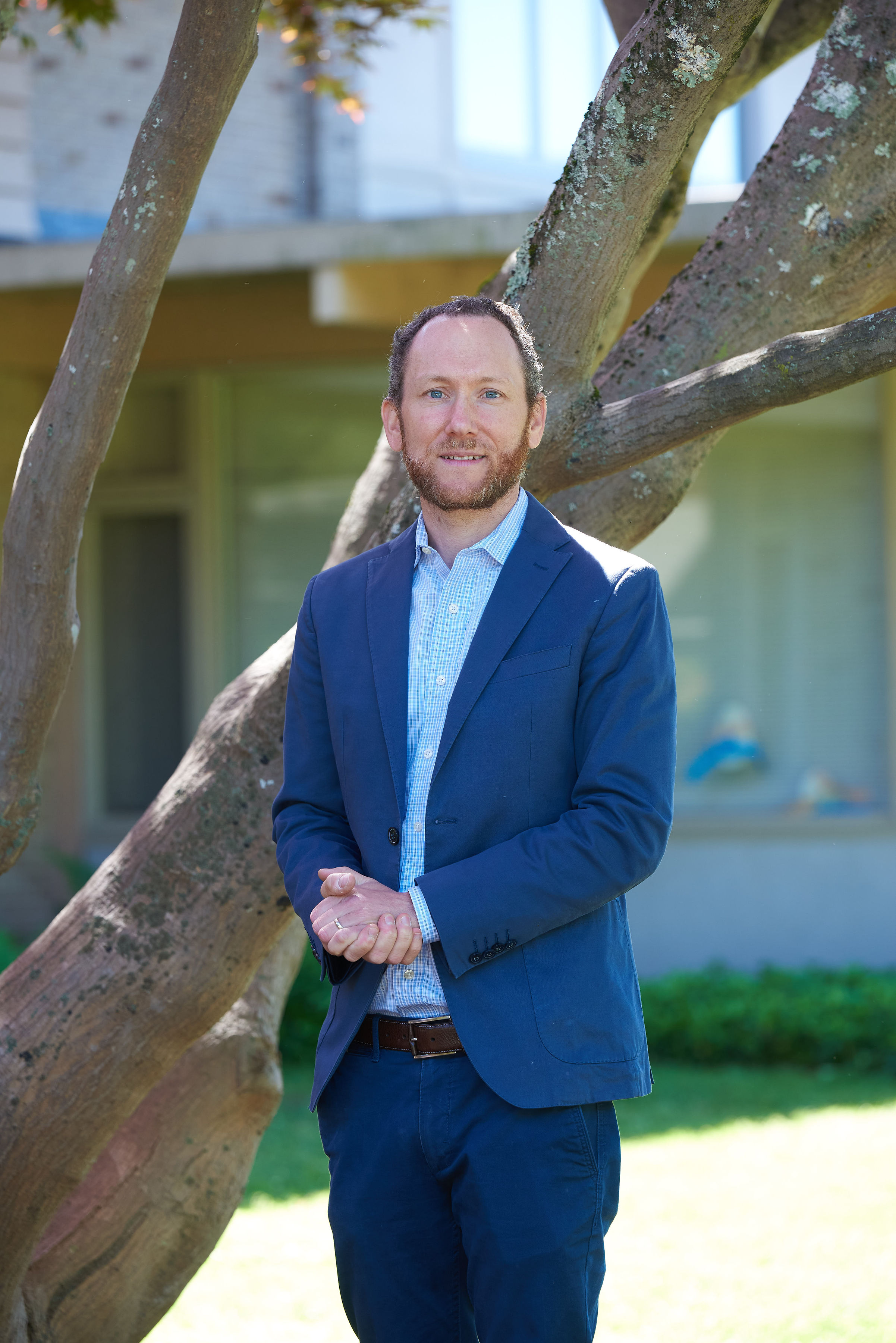
Michael Friedman is originally from Great Neck, NY. He attended Yale University as an undergraduate where he studied history. After school Rabbi Friedman, spent fifteen years in Israel and New York before coming back to Connecticut to take a position six years ago at Westport/Weston’s Reformed Jewish Temple, Temple Israel. He and wife, costume designer, Hayley Lieberman are parents to 2-year-old twins George and Goldie.

“Our community is based around face to face interaction and because of COVID so much of our world these days is digital, interacting through screens. We view our role as providing an antidote to that because that’s what people crave. If you ask our congregation what’s most important, “community” is the term you hear most often. When something comes along that limits that interaction, it’s difficult.
As public institutions, we’re already used to being charge of people’s health and safety. Safety is particularly important especially in this day and age in in the Jewish community. We are used putting that first so in that first week of March when it became clear we couldn’t do biz as usual and make sure people are safe, we had to start limiting programming.
This year, the Purim carnival was scheduled for march 8—the 2nd Sunday in march,. It’s our largest event of the year, other than the high holidays. The largest number of people gather for Purim. At first, we scheduled a delay but then it became clear to us early on that it was just not a responsible thing to go forward with the event and we cancelled on the Wednesday prior. At the time a lot of synagogues were talking about limiting their celebrations for the same date and we were among the first to cancel—not just in Westport but throughout the Metro area. People were surprised and called and asked “what are you doing?” To us, it was the obvious decision. To us, it was the right thing to do. As the days passed that week, Wednesday into Thursday Into Friday and Saturday others temples and organizations canceled their events. I’m proud we were ahead of the curve there in a number of ways.
By the 2nd week of march we seriously limiting a lot of meetings and events. We follow the schedule of the public school so it was a question of watching the schools and seeing what they did. As soon as schools closed, we closed the synagogue. We had a contingency plan to do it. I’m really proud of our community here in that there wasn’t push back because they understood it was for everyone’s safety.
The first stage in this new situation was triage: Figuring out how to move as much as we could online and pastoring to everyone’s sense of crisis.. During that first month we were trying to figure to what degree could we run a nursery school online>. How are the schools getting online? Our religious schools for older kids started providing a supplement. Our worship services had to get online. Then as I said, there was the dealing with trauma: We quickly set up a system where every member in congregation, got a check in from our board or clergy o ra volunteer to say “We are here thinking about you.” In that process, we got a lot of good feedback.
That lasted to Passover, during which a lot of families had ZOOM seders and congregational seders. That was hard because Passover is a big family gathering on Jewish calendar. Then after Passover it was a new state of being, it was no longer about crisis, and it occurred to us all that this will be new normal for long time to come. We shifted from triaging crisis to figuring how to we help congregants deal with long term.
We know people are yearning to come back to their Jewish home and with respect to reopening, we have a task force of lay leaders and professionals creating those plans for us. Health and safety is still the top priority that will never change.
The milestones that people are looking at are beginning of school year for the nursery school and then the high holidays. There’s a range of contingencies we are planning based on this. We have no particular date to open het , we are looking at different factors to guide us including the successes of other businesses, the state guidelines and how similar institutions are proceeding. We are lucky in many respects in that we do not have the same pressure to reopen the building because of the revenue model of synagogues versus many other religious institutions.
So, our priority lies not in re-opening, our priority lies in how do we serve our congregation in very best way even if we can’t be in the same room. How can we use wisdom of Jewish tradition and ritual to guide people through this unprecedented time? How do we help human beings thrive in a time of unprecedented dislocation and isolation? Our building doesn’t need to be open to give people the things they want from synagogue.
I often hear people making comparisons to circumstances of isolation or separation in Jewish history but I don’t think it helps others to think, say, “Anne Frank made it through four years in an attic, so you should tough it out.” What I’ve learned as a rabbis that each person’s struggle is their own struggle—it has nothing to do with comparison. The tsouris [trouble]each person has is real and valid. I think, psychologically, it’s not helpful for that person to draw a comparison to others in worse circumstances but I absolutely believe that the resilience and creativity of the Jewish people thorough history in times way, way worse than this is one is one hundred percent an inspiration.
It’s helpful to remind ourselves we are strong and we know how to deal and the most difficult situations
There’s a specificity for Jews that we have a strong connection to our ancestors and our people and we think of the Jewish community through time as our family, our community, our tribe who have done great things in the face of much greater struggles.
Some small things that we’ve done that I believe fall within that tradition of creativity out of adversity is that
We’ve been wanting to reshape elementary school age Hebrew learning, when everything was moved online it forced us to experiment with online learning, which were considering but we wouldn’t have been forced to experiment with. Now we are seeing which teachers are effective in this medium and who it benefits. It was a forced learning lab for us.
COVID is going to force us to rethink high holidays: When and how we celebrate them. We knew we wanted to live streaming in general but we weren’t ready and didn’t have infrastructure. Now, there’s no going back because we are going to live-stream going forward. This is cutting edge right now for synagogues– the crisis forces us to take steps that we would have taken our time doing.
We’ve also, traditionally, really thought of our programming in terms of people showing up in person at the synagogue. Who is going to show up when for what? This new-normal helps normalize participating without necessarily being in room, even if others are. We envision a community where some are in room and others aren’t. You don’t have to be in room and you shouldn’t feel “less than” for not being there. In the past, we’d accommodate a couple of people who couldn’t make it using propped up iPhone. It wasn’t a regular accommodation but that will change.
Right now, all services are on Zoom including Family Shabbat, our Friday evening service. Tora study and Saturday morning services are on zoom as well as Saturday evening service. None of us have been back in building to date.
I’ve conducted Bar Mitzvah’s and funerals as well as baby naming ceremonies on zoom. I’ve given a lot of thought about how do you conduct life cycle rituals if you cannot be together? Particularly mourning rituals—and I was inspired to write a piece about that for our blog.

I used to assume, that if people wanted to hear what we had to say they’d come Friday night—that’s our primetime. In winter, we started to podcast our sermons and make available to download and listening to make it available for those who might not be able to come. And I realize in this time, even that’s not enough. I’ve been writing a weekly message to the congregations—lots of rabbis do this—but I realized there is a need for inspiration from Jewish tradition on a weekly basis. We are seeing greater numbers, engaging in this way. Even in the future, many are not going to come, it needs to be a push more than a pull. Getting the message in your inbox is part of that.
In many ways, people have nothing else to do, so they are coming to more virtual events—, of course, I’m aware that not all this engagement will continue once the world gets back going
Rahm Emmanuel, the former Mayor of Chicago and President Obama’s chief of staff said “Never let good crisis go to waste. It provides an opportunity to do things that were not possible before.”
I love this quote. It describes how we are thinking and planning differently. We are planning multiple high holiday contingencies, different scenarios, because I don’t feel comfortable making decisions for three months out,. But what we start now gives us opportunities to even rethink what does a new schedule of services look like—even if things are re-opened? Not everyone will want to just come back. This part is what’s most exciting. IT forces me to say how would you do a 2 hour Rosh Hashana service in 1 hour? Now I think down the line…maybe next hear if, god willing, we can do in person services maybe we can do an alternative 1 hour service. So if you want to come 1 hour or 2 you have options. . We’d never have thought that before.
I think about a traditional Jewish phrase said at Passover “Next year in Jerusalem” Here’s the amazing and crazy thing: Next year in Jerusalem was said by for millennia by people who could never ever hope to ever really go there. It was a statement of hope: Next year, the world will be better, we’ll be able to be home. And then all of a sudden we could go to Jerusalem, it was actually possible. This dream was kept alive until that it became a reality. Whatever your “next year in Jerusalem” i it’s a flame of hope to be kept alive and I think people are tapping into that feeling with respect to a post-COVID future.
For me, for example, it’s a devastating possibility that school wont’ be in session because of what that does to the economy and how people are struggling, and balancing childcare and earning a living. So, I need to believe and hope that school will be session.
Personally, I have realized how much I thrived on the in person and interaction of other human beings and responding with body language and emotion and proximity. I am not as good on zoom, it is not the same. We are doing the best we can and having some success but I am not the same rabbi on zoom. I wonder if any teacher or doctor regarding telemedicine would say they are same practitioner. We are doing the best we can, but I’m not same. I deal with a total life cycle– I can have a morning funeral and an afternoon meeting with bar mitzvah students. We are really missing the celebrations: The bar and bat mitzvah’s are being put off, all of the weddings are postponed, the baby namings postponed. Funerals can’t be postponed because of the Jewish tradition so now I’m largely dealing with that single aspect of the lifecycle. And we dealing with a community dealing with loss, hardship and sadness, no one is celebrating–there is nothing to celebrate. I think that I desperately miss the balance of joyful and difficult that is generally part of a rabbi’s life. There is still joy to be found but the balance is different.
My fear is that life will never return to what it once was and the fear is based so much that the idea that life before was so great. It’s the fear of the unknown and we human beings have such difficulty dealing with change and the world will change but we don’t know how. That’s what’s different from every other crisis in our lifetimes in near memory: We don’t know how life will go one because we don’t know the path virus will take, how to solve it. What are temporary adjustments or permanent changes? We don’t know if this is a significant event that will not change the course of human history or will it. I think that unknown is a fear.
…the fear is based so much that the idea that life before was so great
In terms of hope, as a rabbi I would hope that people really appreciate, see and understand how Judaism and how Jewish community can provide hope and comfort in a tumultuous world on the one hand. On the other hand, I would hope that people really value the joy and wisdom that tradition can bring to their lives even when things go back to normal or a new normal is reached.”